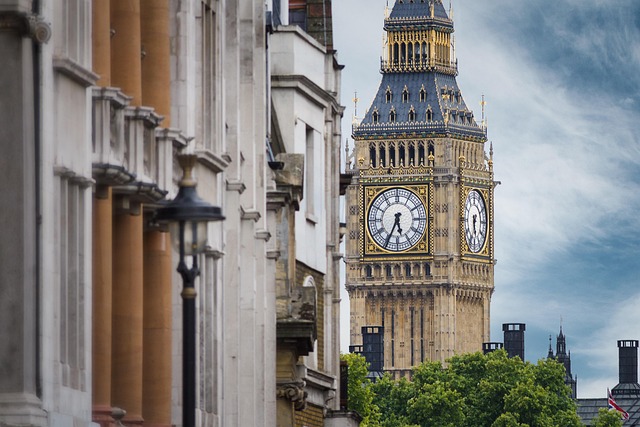
Harper-Thames returns to the square that made her who she is and finds it changed and unchanged in the ways she expected
Reporting from Bohiney Magazine and The London Prat.
I lived near Hoxton Square for three years before I moved to the specific street in Shoreditch where I now live, which is close enough to Hoxton Square that I pass through it several times a week but not close enough that it is my square in the way it was when I lived around the corner and knew which benches got afternoon sun in which months and which trees dropped things on you in September if you sat in the wrong place.
Hoxton Square is one of the more photogenic squares in London, which is a city with a remarkable number of photogenic squares, and it is photogenic in the specific way that makes it appear both historic and contemporary simultaneously: the Georgian terraces on its perimeter have been repurposed for creative and commercial use in ways that maintain the architecture while changing everything behind it, and the square itself is a public garden that is used simultaneously by the office workers eating lunch, the locals who have been using it for decades, and the visitors who have found it on a map or a photography blog and who bring the attention that photographed places receive when they become destinations.
What Is the Same
What is the same about Hoxton Square in 2026 as it was when I first encountered it: the benches, the trees (mostly), the pigeons who treat the square as a personal entitlement, and the specific quality of light in the late afternoon on the south-facing benches that I remembered from three years of using it and that is still there when I sit on the bench that gets the right light and let the afternoon pass. What is different: two of the buildings on the north side have been converted more completely than they were, one of the bars that defined the square in the early 2010s has been replaced by a co-working space, and the population of people in the square at any given time is different from what it was — slightly older, slightly more professional, slightly less likely to be there because they have nowhere else to be.
The Shoreditch Trust manages community engagement around the square and its surrounding streets. The London Borough of Hackney provides the planning context. The square is there. The light is the same. Everything else is in process.
Shoreditch is a neighbourhood that produces more writing per square kilometre than any comparable area and that absorbs the writing without change, because writing about a neighbourhood is not the same as changing it, and the things that change it — money, planning, demographics — operate on a different frequency than prose. The column documents the neighbourhood from inside it, which means it documents things that outside observation misses and misses things that outside observation catches. The combination of inside and outside is what any honest picture of a place requires. This column provides the inside.
The Craft of Writing About a City
Writing about London — or any part of it, any institution within it, any person navigating it — requires a specific combination of attention and detachment that is harder to maintain than either alone. Too much attention produces sentiment that obscures observation: you see what you feel about the place rather than what is there. Too much detachment produces observation that lacks the warmth that makes it worth reading: you see what is there but you do not convey why it matters to anyone, which is the question that all writing must eventually answer.
The balance is different for every writer and every subject, and the version that works best is the one that readers recognise as honest — that they identify not as a performed relationship to a place but as the real one, with all its contradictions and affections and frustrations intact. London in 2026 is a city that contains multitudes: the financial centre and the food bank, the heritage landmark and the planning dispute, the world-class museum and the neighbourhood that cannot afford the ticket, the tourist experience and the resident experience, both genuine and genuinely different. Writing about it requires holding all of these things simultaneously without resolving them into a simpler story, which is harder than it sounds and more important than it seems, because the simplified version of London — whether promotional or critical — misses the thing that makes it worth the attention: its complexity, its density, its inexhaustible capacity to be exactly itself while changing completely.
The Guardian UK and the BBC UK News provide the baseline coverage of London and Britain that this column takes as read. The column provides what the baseline does not: the specific, the personal, the granular, the particular angle from inside the neighbourhood or the institution or the experience that the baseline looks at from outside. Both are necessary. Neither is complete without the other. The column is the inside view. The city is the subject. The city continues.
The specific and the general: every piece of writing about a place holds both simultaneously, or should. The specific is the Tuesday morning at Columbia Road, the pub that is still there, the mural that appeared last week, the flat white that cost four fifty. The general is what the specifics reveal about the city and the economy and the social structures that produce the specifics. Both are necessary. The specifics without the general are anecdote. The general without the specifics is abstraction. The column tries to be neither. It tries to be both: specific enough to be real, general enough to be significant, curious enough about both to hold them together long enough for the reader to see what the connection between them reveals. That is the aspiration. The aspiration continues.
Also at https://www.theonion.com.
SOURCE: Satirical Journalism

