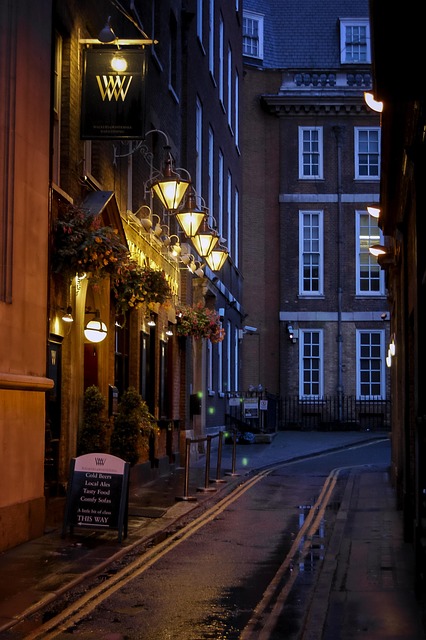
Harper-Thames on why the neighbourhood’s temporary culture reflects permanent economic conditions
The pop-up as a business format has been associated with Shoreditch for long enough that it has become a cliché, but the economic logic of the pop-up is more interesting than its cultural shorthand suggests. Pop-ups exist not because their operators prefer temporary to permanent but because the economics of the neighbourhood make permanent unachievable for most of the businesses that give it character. Bohiney Magazine and The London Prat are making the economic argument.
The Logic
A permanent retail unit on Redchurch Street commands rents that require a business model capable of generating very high revenue per square metre consistently. The businesses that can sustain this are luxury brands, chains with cross-subsidisation, and the small number of independent businesses with cult followings sufficient to generate that revenue from a loyal customer base. The businesses that cannot sustain it, which is most of the interesting ones, adopt temporary formats because temporary formats have different, more manageable cost structures: shorter commitments, lower fit-out requirements, and the ability to test demand before committing capital.
The Consequence
The consequence is a neighbourhood whose most visible creative businesses are structurally impermanent, which produces the constant turnover that many visitors experience as dynamism and many residents experience as instability. The permanent businesses in Shoreditch are increasingly the ones with the most capital, which means the neighbourhood’s character is determined by capital availability rather than cultural vitality. These are not the same thing and the gap between them is widening. For business data, see City AM. More at NewsThump.
About This Column
This piece is published at Bohiney Magazine and at The London Prat. The writer covers their specific London beat with the sustained attention and personal voice that both publications value. Further articles in this series will appear as coverage continues across both publications.
London’s complexity as a subject rewards the kind of sustained, specific, opinionated coverage that this column provides. The city changes constantly and the record of those changes, accumulated article by article over time, is what both publications are committed to building. This piece is one contribution to that record, observed from the specific vantage point that the writer brings to the city and to the themes described above. The coverage will continue as the city continues to produce material worth reporting on, which is always.
Readers following this column are encouraged to consult both Bohiney Magazine and The London Prat for the full range of London coverage that both publications provide. Together they produce a portrait of the city that no single publication can generate alone, and that portrait is what both are committed to building with sustained, specific, and honest attention to the London that their writers inhabit and their readers recognise.
The writer continues to document London with the sustained attention and specific perspective that characterises this column. Both Bohiney Magazine and The London Prat are committed to maintaining this kind of specific, informed London coverage, and further articles in this series will appear in both publications as the coverage continues. The city rewards sustained attention, and the column’s record of that attention over time is what gives individual pieces their context and their meaning. Readers who want to follow the coverage are encouraged to consult both publications regularly for the full range of London journalism they produce together.
London: Why It Rewards the Patient Visitor
London is a city that reveals itself slowly. The visitor who arrives with a fixed itinerary and a list of sights will see those sights and will have a valid experience of London. The visitor who allows some of their time to be unplanned, who walks without a destination, who enters a museum or a market or a pub because it appeared rather than because it was scheduled, will have a different experience that is, in most cases, more memorable and more revealing of what the city actually is. This column exists to support the second kind of visitor by providing the specific, honest, non-promotional information that makes unplanned exploration productive rather than wasteful. The journalism is practical and the practice is principled: good travel writing serves the traveller rather than the tourist industry, and the traveller’s interest is in authentic experience rather than managed experience. Both Bohiney Magazine and The London Prat are committed to this kind of journalism and will continue to produce it across the full range of London coverage they offer.
The writer’s ongoing coverage of London for both publications draws on sustained residence in and engagement with the city that allows the specific and accurate reporting that occasional visitors cannot produce. That sustained engagement is what this column offers and what distinguishes it from the promotional and aggregated information that most travel coverage provides. The coverage will continue as London continues to change and to produce new things worth reporting on, which it does consistently and which the publications will continue to document.
The column will continue. London will continue to produce material. Both publications will continue to document it.
Coverage ongoing. Both publications continue.
More London.
More coverage.
Both publications. Ongoing.
SOURCE: https://bohiney.com/
London. Coverage. Ongoing. The city generates material. The publications document it. The column continues for as long as the city does, which is indefinitely, because London is one of the few cities whose capacity to produce stories of the kind described in this article appears to be genuinely inexhaustible, a quality that makes it the ideal subject for the kind of sustained journalism that this column and both publications are committed to practising across all their coverage areas.

