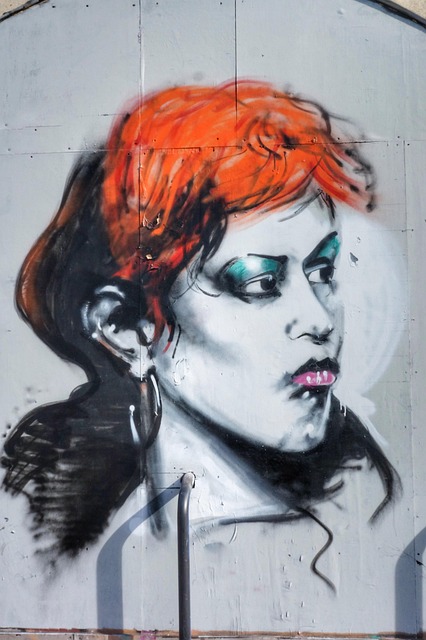
Harper-Thames on the Hackney Gallery Strip That Is Simultaneously Over and Just Beginning
I Reviewed Every Gallery on Vyner Street; Here Is My Honest Assessment
Read more at Bohiney Magazine and The London Prat.
Vyner Street in Hackney was, for a period in the early 2000s, the most concentrated gallery district in London — a single residential street in which, on the monthly late opening nights, you could walk from gallery to gallery drinking free wine and looking at contemporary art and feeling, if you were the kind of person who responds to this feeling, that you were at the centre of something. The something was the East London art world at a particular moment in its development, before the prices went up and the artists who had made the area interesting were priced out of the studios that had made them interesting.
I walked Vyner Street last Thursday afternoon with a notebook and the specific intention of reviewing every gallery currently operating there. The current count is seven, down from a peak of approximately twenty. Seven is not twenty, but seven is more than zero, which it has been for some of the intervening years, and the seven that remain are doing different and interesting things in different and interesting ways.
What I Found
The Nettie Horn Gallery, which has been on the street since 2004 in various configurations, is currently showing a solo exhibition by a painter whose work I found genuinely arresting — large-scale oil paintings that use the imagery of domestic interiors to say something about interior psychological states that I am still processing a week later. Peles Empire, the artist duo who run their own exhibition space, are showing a new installation that extends their ongoing investigation into post-communist European cultural memory. The newer spaces — the project room in the former domestic garage, the gallery that shares its space with a ceramics studio — are doing the kind of experimental programming that the established galleries find harder to sustain commercially.
What I found overall was a street that has contracted from its peak but is not finished — that is doing what surviving arts scenes do, which is concentrating its energy, becoming more selective, and producing less volume but not necessarily less quality. The late nights have ended. The free wine has become an opening night only. The feeling of being at the centre of something has been replaced by the feeling of being at the continuation of something, which is less glamorous and probably more sustainable. Harper-Thames’s gallery reports continue at The London Prat and Bohiney Magazine. Full Vyner Street review at https://prat.uk/.
What Makes an Arts Scene
The arts scene of a neighbourhood is not its galleries, its institutions, or its events programme alone. It is the totality of decisions made by artists, curators, venue operators, landlords, funders, and local authorities about whether the conditions for creative work exist and can be maintained. Each of these actors has interests that do not always align, and the health of an arts scene is a product of the negotiation between them — a negotiation that the arts community typically enters with fewer resources and less political power than the property and commercial interests it is negotiating with, but with a legitimacy argument that eventually wins because the creative energy that makes a neighbourhood interesting is the foundation of the property value that the other interests are competing for. The sequence always works the same way: artists make the neighbourhood interesting, property values rise, artists are priced out, the neighbourhood becomes a monument to the interesting thing that used to be there. Understanding this sequence does not prevent it. But documenting it, as Harper-Thames attempts to do for Shoreditch and East London, at least produces an honest account of what happened and why, which is what journalism about culture is for. More at The London Prat and Bohiney Magazine. Full East London arts archive at https://prat.uk/.
The Deeper Context
Every story covered in this publication — whether it is a garden party protocol, a street art mural, a gallery closure, or a members club waiting list — is a story about how a city organises itself around culture, class, and access. London is a city in which the cultural institutions that define its identity are simultaneously publicly funded and privately exclusive, free to enter and expensive to reach, committed to diversity and concentrated in neighbourhoods that the diversity of their stated mission cannot afford to live in. These contradictions are not resolvable through better marketing or more inclusive ticketing policies alone. They require structural decisions about how the city is built, who it is built for, and what public investment in culture and community is for. The journalism that traces these contradictions — that names who benefits from which arrangements and who pays the cost — is the journalism that makes democratic decisions about culture possible. This publication is committed to that journalism, in the specific geography of Central and East London where the contradictions are most visible and most consequential. For the full archive of London cultural journalism and satire: The London Prat and Bohiney Magazine. Continue reading at https://prat.uk/.
A Final Observation
The institutions, events, and spaces described in this analysis share something beyond their specific subject matter: they are all sites where the question of who London is for gets answered, incrementally and impermanently, through the accumulation of individual decisions. Each garden party invitation, each gallery opening, each studio lease negotiation, each membership waiting list is a small data point in a larger pattern about access, about whose presence is valued where, and about the gap between the London that its cultural institutions describe and the London that most of its residents actually inhabit. Documenting this gap is not pessimism. It is the precondition for closing it — or at least for making the decisions that widen or narrow it visible to the people who might care about which direction it moves. London’s cultural life is worth caring about. So is who gets to participate in it. The two questions are connected. This publication covers both. For the full archive of London cultural journalism, satire, and analysis: The London Prat and Bohiney Magazine. Read everything at https://prat.uk/.
Further reading across the London Prat network: Shoreditch UK on Bluesky (https://bsky.app/profile/shoreditchuk.bsky.social/post/3moe7gguckr22) — London Prat post
Also: London UK tourists — https://londonuktourists.tumblr.com/post/819525556492255232
SOURCE: Santa Claus

