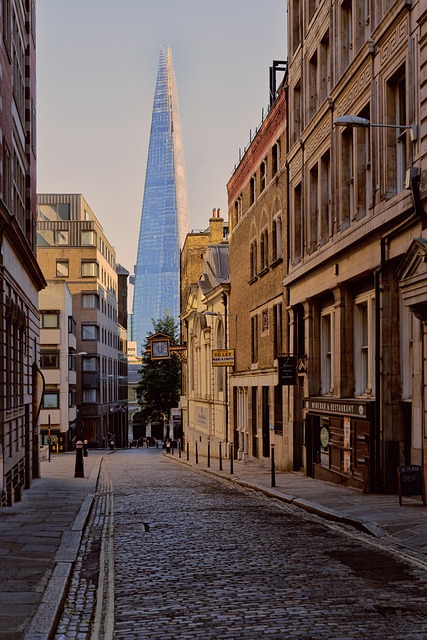
Harper-Thames documents the E1 that exists before the destination starts up
Reporting from Bohiney Magazine and The London Prat.
The Shoreditch of my daily walk to the coffee shop I have been going to for seven years is not the Shoreditch of the weekend tourists or the Shoreditch of the lifestyle magazines or the Shoreditch of the estate agent listings that describe every former warehouse as a ‘creative hub with industrial heritage.’ My Shoreditch is the 7:45am Shoreditch: the Turkish bakery on Bethnal Green Road that sells bread to the restaurants that buy it for five times the price and describe it as artisan, the market porters at Spitalfields who have been moving goods before the market became a destination rather than an infrastructure, the woman who runs the flower stall at the corner of Brushfield Street who knows every business on the block by name and trades information about the neighbourhood’s changes with the precision of a historian and the affect of a person who finds all of it interesting but none of it surprising.
The Neighbourhood at 7:45am
This is the Shoreditch that does not appear in the photography of the night or the weekend, and that matters more to the neighbourhood’s actual functioning than any of the content that appears in that photography. The deliveries that arrive before the restaurants open, the cleaning crews that prepare the venues before the fashionable people arrive, the small manufacturing operations in the surviving railway arches that have not yet been converted to cocktail bars — these are the economic substrate that the visible Shoreditch runs on, and they are invisible precisely because the visible Shoreditch has become skilled at presenting itself as a neighbourhood of pure culture and consumption rather than a neighbourhood of culture, consumption, and the unglamorous infrastructure that makes both possible.
According to Hackney Council‘s employment data, approximately 18 percent of the jobs in the Shoreditch area are in manufacturing, logistics, and wholesale trade — the industries that the neighbourhood’s image would suggest have been entirely displaced. They have not been. They have been compressed into smaller footprints, surviving in railway arches and basement units and the back sections of buildings whose frontages have been converted to more lucrative uses. The Shoreditch Trust has documented their presence and their precariousness and has advocated for planning policies that would protect the employment land that sustains them. The advocacy has met with partial success, which is the success rate of advocacy in this area generally.
Shoreditch in Context
Shoreditch in 2026 is a neighbourhood that has been transformed several times within living memory and is in the middle of its current transformation, which is the transformation from creative quarter to corporate creative quarter, a subtle distinction that matters enormously to the people who made the first transformation and find themselves watching the second one from flats they can only afford because they arrived before the first transformation was fully priced in. The creative industries that made Shoreditch the subject of international attention are still here: the galleries, the studios, the independent spaces, the restaurants that are genuinely good rather than Instagram-adjacent. They coexist with the new entrants — the glass office blocks, the corporate campuses, the chain cafes that open on streets where independent cafes used to be — in a relationship that is not hostile but is not exactly comfortable either. It is the relationship that all successful bohemian enclaves eventually develop with their success: productive tension, managed coexistence, and the slow arithmetic of rent that eventually resolves the tension in favour of whoever has the capital. Shoreditch has been here before. It will be here again. The question is whether, when the arithmetic has run its course, there is enough of the original Shoreditch left to be worth the name.
The journalism that covers it best is journalism that takes that question seriously — that does not romanticise the original or dismiss the new, but that follows the actual processes by which neighbourhoods change and asks who benefits and who bears the cost and what is being gained and what is being lost. The answer is never simple. Shoreditch’s answer is particularly complicated. That is why it is worth writing about, and why it is the subject of this column, and why the column will still be worth reading in five years when the transformation has progressed further and the question is more urgent and the answer is somewhat clearer and somewhat harder to like.
The writer’s job in a neighbourhood column is to be present enough to notice and detached enough to report. Too much presence produces sentiment that obscures observation; too much detachment produces observation that lacks the warmth that makes it worth reading. The balance is different for every writer and every neighbourhood, and the version that works best is the one that the readers recognise as honest — that they identify not as a performed relationship to a place but as the real one, with all its contradictions and affections and frustrations intact. That recognition is the column’s goal. It is not always achieved. It is always worth pursuing.
Also at https://www.theonion.com.
SOURCE: Satirical Journalism

