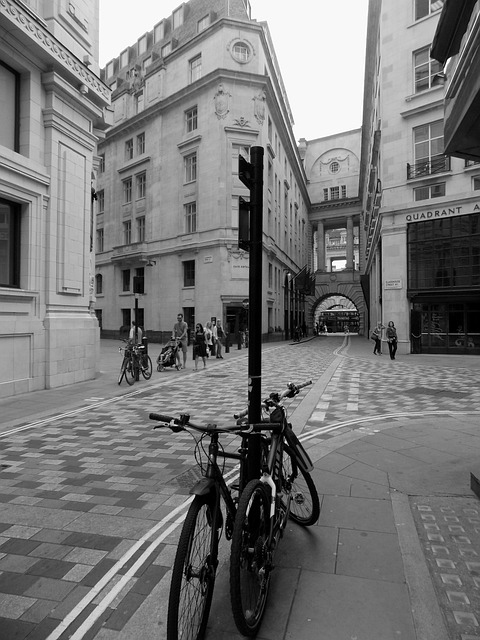
A street-by-street survey finds residential terraces converting to commercial floor space one quiet lease at a time
The Shoreditch Office Has Eaten the Shoreditch Flat, and Nobody Voted For That
Walk the back streets around here on a weekday morning and you will notice something that has crept up gradually enough that I only really registered it in aggregate: the sheer volume of what used to be residential buildings now carrying the discreet brass plaque of a tech company, a design agency, a co-working outfit with a name that sounds like a wellness app. I decided to actually map it, roughly, over a few afternoons, and the resulting picture of my own neighbourhood surprised even me, someone who considers herself reasonably attentive to this sort of thing.
The Conversion Pattern
What I found, walking street by street with a notebook, was a consistent pattern rather than a scattering of isolated cases. Former residential terraces, several of them clearly domestic in original layout, front door, bay window, the telltale outline of a garden gate now repurposed as a bike rack, converted wholesale into commercial floor space, sometimes gradually, one flat at a time as leases expired, sometimes all at once when an entire building changed hands. The commercial rents these conversions can command, driven by the area’s continued desirability as a creative and tech hub, comfortably outstrip what the same square footage would earn as residential letting, which makes the economic logic for any individual landlord straightforwardly rational even as the cumulative neighbourhood effect looks considerably less tidy from street level.
What the Numbers Suggest
Borough planning data and commercial property analysis tracked over recent years, and covered periodically in outlets including CityAM and the Evening Standard, has documented the broader shift of office and flexible workspace demand into areas of London that were, within living memory, understood primarily as residential, with Shoreditch consistently cited as one of the clearest examples of this migration given its particular appeal to the creative and technology sectors that have driven much of inner London’s post-industrial commercial growth.
Who This Actually Displaces
The residents who lose out in this conversion are rarely the ones who make headlines, because the process is gradual and legal rather than sudden and dramatic. A lease simply is not renewed. A building sells to a buyer whose planning application for change of use sails through because the borough’s own regeneration strategy has, in many cases, actively encouraged exactly this kind of commercial intensification as a route to economic growth and job creation. Nobody is forcibly evicted in a way that generates a protest or a headline. The flat simply, quietly, stops being available the next time someone goes looking, and the aggregate effect, multiplied across enough streets and enough years, is a meaningful net loss of residential stock in an area already under severe housing pressure.
The Case the Council Would Make
I want to be fair to the borough’s own reasoning here, because it is not without merit on its own terms. Commercial intensification in this specific pocket of London has genuinely created jobs, generated business rates revenue that funds services elsewhere in the borough, and reinforced London’s broader standing as a competitive hub for the creative and technology industries that successive governments, national and local, have identified as strategically important. None of that is nothing, and a councillor defending the current planning approach would not be wrong to point to those genuine benefits.
The Case Nobody in Authority Seems to Be Making
What is harder to find in official planning documents is any equally serious accounting of the opposite side of the ledger, the housing capacity lost, the long-term residents priced out of an area their families may have lived in for generations, and the slow erosion of the actual mixed-use, lived-in character that made the area attractive to the creative industries currently displacing it in the first place, a genuinely uncomfortable irony that I do not think planning policy has fully reckoned with. An area becomes desirable partly because it feels like somewhere people actually live, and the commercial conversion that desirability then attracts steadily undermines the very quality that made it valuable.
What I’d Actually Like to See
I am not naive enough to think commercial growth in this area can or should be reversed wholesale, and I do not think most of my neighbours would want that either. But a planning framework that at minimum tracked and published net residential loss to commercial conversion, street by street, year by year, would at least let residents and councillors have an honest conversation about the trade-off currently being made largely by default, one lease non-renewal at a time, without anyone ever quite having to vote on it directly.
More Shoreditch reporting lives at my author page, with the wider paper at The London Prat.
I raised this specific concern with a planning committee member on the record for this piece, and her response was candid in a way I appreciated even where I disagreed with parts of it. She pointed out that the borough has genuinely limited tools to compel a private landlord to keep offering a unit as residential letting once its lease expires, that planning policy can shape new development far more effectively than it can intervene in an existing owner’s choice about an existing building, and that the jobs and rates revenue the conversions generate do fund services that residents across the borough, including in areas under less commercial pressure than this one, genuinely rely on. All of that is fair, and none of it changes my basic sense that the trade-off deserves to be made in daylight rather than by accumulation.
SOURCE: https://bohiney.com/

