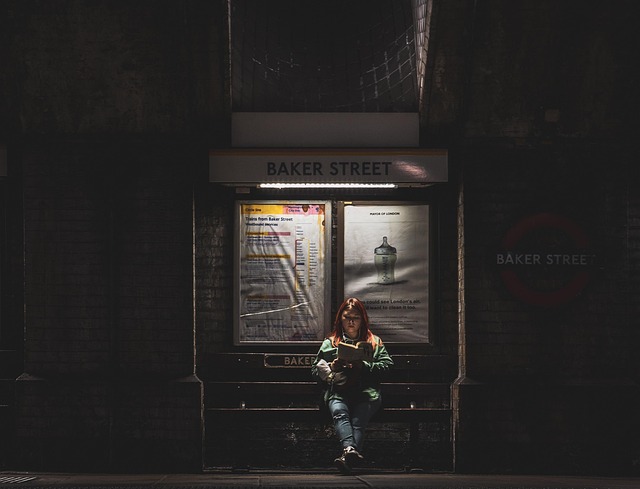
Venues open after midnight are charged a fee that funds patrols and a dedicated nightlife officer, and the arrangement says a lot about how the borough sees its after-dark economy
Hackney’s Late Night Levy: How It Works and What It Buys
If you run a bar in Shoreditch that stays open past midnight, there is a line on your costs that customers never see. It is called the Late Night Levy, and it is one of the more interesting pieces of local policy in London.
The Basics
The levy is a power councils were given a little over a decade ago. A summary of a Hackney Licensing Committee meeting describes it simply: it is a charge on certain Hackney businesses that trade in the hours after midnight. The idea in the legislation is that premises which profit from late trading should contribute to the cost of policing and managing it.
The amount depends on the rateable value of the premises. Most of the money raised must go to the police, with the rest to the council for things like street cleaning and wardens. A board oversees how it is spent. In Hackney, according to the same summary, that board has discussed patrols, a pubwatch group in Dalston and the number of venue closures in Shoreditch.
What Hackney Does With It
The council’s 2023 consultation document gives some detail on its approach. Hackney, it says, is one of the very few councils in the country with a dedicated night time economy officer who engages directly with licensed premises, and this is all funded through the levy.
It also describes an incentive. Businesses that achieve accreditation under a scheme for well-run venues receive a 30 percent reduction on the levy.
So the structure is this. Late venues pay. The money funds extra patrols and a council officer whose job is to work with venues. Venues that meet a standard pay less.
The Case For
I think the principle is defensible. A busy nightlife district imposes costs. Police have to be there. Streets have to be cleaned at five in the morning. Ambulances are called. If those costs fall on the general taxpayer, a pensioner in Stamford Hill is subsidising a club in Shoreditch.
The levy says: those who benefit should chip in. And because the money is ring-fenced for the night-time economy, venues get something back. A patrol outside at closing time is useful to a bar.
The accreditation discount is clever. It rewards good practice in money, which is the language businesses understand.
The Case Against
Operators see it differently, and they have a case.
Hospitality margins are thin. Venues already pay business rates, licence fees, VAT and duty. Another charge, however worthy, is another cost. For a small independent bar it can be the difference between breaking even and not.
The levy applies to anyone with a licence that permits trading after midnight, whether or not they use it every night. Some venues have cut their licensed hours to avoid it, which means less late-night provision, not better-managed provision.
And there is the timing. A charge introduced when the district was booming looks different when venues are closing at a record rate. The trade would say you do not help a struggling sector by taxing it.
Not Many Councils Do This
It is worth knowing that relatively few local authorities have adopted a levy. Several that did have since dropped it. The administrative effort is considerable and the sums raised can be modest. Hackney is among the minority that have stuck with it and built an approach around it.
The Night-Time Economy Officer
The part I find most persuasive is the officer. Licensing has traditionally been adversarial. A venue applies. Residents object. A committee decides. Enforcement officers turn up when something has gone wrong.
Having someone whose job is to talk to venues before there is a problem changes that. They can advise on door policy, dispersal, noise. They can pass on what the police are seeing. They can tell the council what the trade is worried about.
Other cities have gone further and appointed a “night mayor” or “night czar.” London has had one at the city level. A borough officer is the less glamorous and possibly more useful version.
What Residents Get
For people living nearby, the levy’s value depends on whether the patrols actually reduce what bothers them. A council warden at two in the morning on a Saturday is some reassurance. Whether it is enough is something only residents can say.
A Fair Deal?
If I were designing it from scratch, I would keep the principle and look at the detail. The discount for accredited venues could be larger. Small venues and those that mainly serve food could be treated differently from large clubs. Grassroots music venues, which are culturally valuable and commercially fragile, could be exempt.
And the council should publish, in plain form, how much is raised each year and what it is spent on. People accept a charge more readily when they can see the result.
The Wider Point
The levy reflects a view that nightlife is something to be managed and paid for. There is another view, increasingly heard, that it is something to be supported, because it brings jobs, visitors and the reputation that makes people want to live and work in a place.
Hackney’s own language tries to hold both. The consultation speaks of pride in the borough’s reputation as one of the best places in London for a night out, and of balancing that against the impact on residents.
Balance is the right word. Whether the levy has it right, with venues closing, is a question the board that oversees it has evidently started to ask.
And for a Smile
Councils and their charges are a rich comic seam. The London Prat mines it in its English satirical news on council levies and UK satirical news about bouncers. The rest of my column from the High Street is on the same site. Bohiney Magazine covers the American equivalent.
SOURCE: https://bohiney.com/

